SUSCHAR: Valorisation of solid carbon-rich residue (CHAR) as a sustainable resource in cement-based systems
Principal researcher:
Lourdes Soriano Martínez
María Victoria Borrachero Rosado
Team members:
- Jordi Payá Bernabeu
- José María Monzó Balbuena
- Ester Giménez Carbó
- Ana Mellado Romero
Funding Agency:
Duration: 01/09/2026 – 31/08/2029
Reference: PID2025-170541OB-I00
Abstract
In 2023, the concentration of atmospheric CO2 surpassed 420 ppm. Its concerning to know that we are approaching potential tipping points related to climate change, which could have profound effects on our planet and future generations. Humanity has converged on the goal of achieving net-zero greenhouse gas emissions by 2050. This objective is at the heart of the European Green Deal. All parts of society and economic sectors will play a role,from the power sector to industry, transport, buildings, agriculture, and forestry.
The concrete industry is a crucial sector for two main reasons: first, it is the second most consumed material worldwide, trailing only behind water, with an estimated annual consumption of over 30 billion tonnes. Second, it accounts for approximately 9 to 10% of global CO2 emissions. The cement is responsible for over 75% of the CO2 emissions in concrete. Therefore, alternative options need to be developed to achieve the goal of transforming the cement industry into a cleaner and more sustainable one.
The current project aims to reduce emissions generated by the construction industry while creating synergies with other sectors, such as high-grade fuel oil and biochar production. Additionally, it is important to note that the technology developed from this project could enhance construction materials, particularly in applications related to thermal and acoustic insulation, among others.
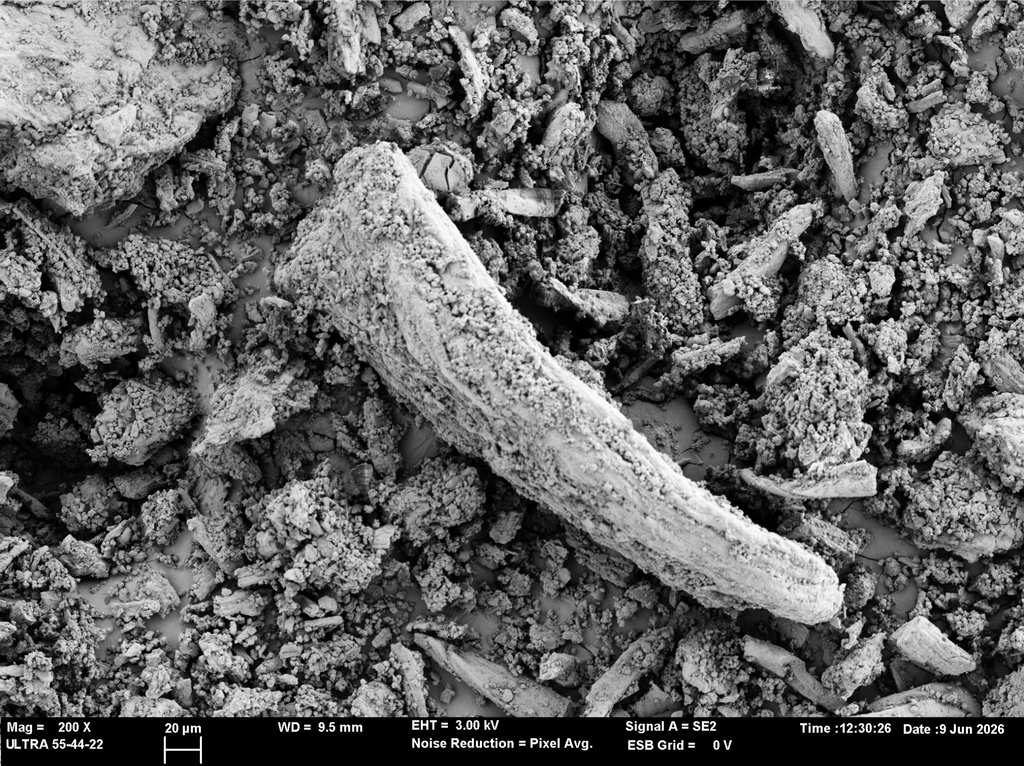
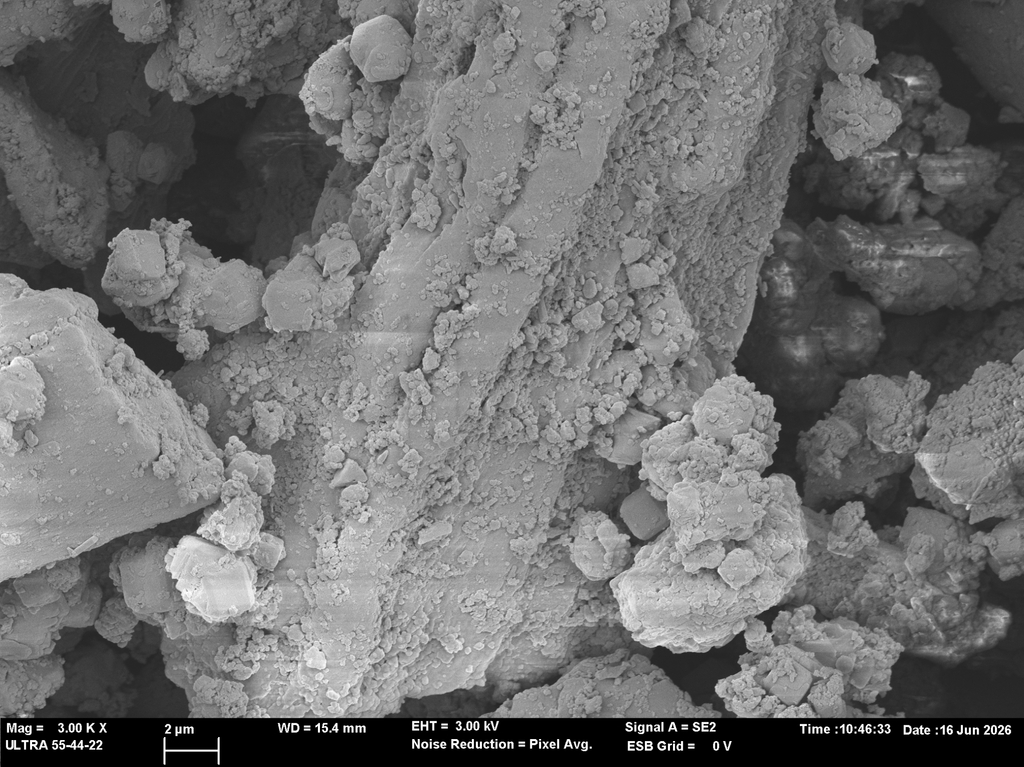
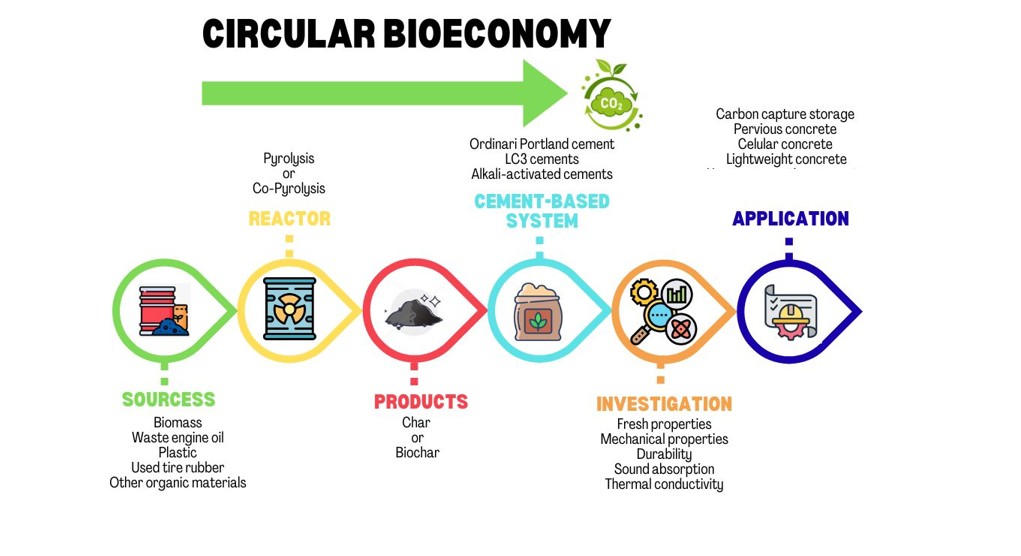
Biochar (BC) is a waste material derived from the thermochemical conversion of various raw or waste biomasses in an oxygen-limited environment. In a more general context, we can employ the term “char” (CH) to describe the solid residue generated after a thermochemical process transforms organic materials into char, oil, and gas. This process may be produced by pyrolysis, gasification, torrefaction, combustion, hydrothermal liquefaction, and hydrothermal carbonisation. We aim to investigate the feasibility of incorporating this CH/BC as an additive in various cement-based systems, including ordinary Portland cement (OPC), LC3 cements, and alkali-activated cements. The main novelty of the project is based on the use of CH waste in cement-based systems, since BC is more widely used in cement-based systems, especially in OPC. No references have been found to the use of CH from the pyrolysis of waste engine oil (WEO) in cement-based systems, which means a new field to explore that could be of great interest both at a scientific level and in terms of knowledge transfer to industries that generate CH after the WEO’s pyrolysis process.
The present proposal could contribute valuable insights into sustainable construction practices. There are several Sustainable Development Goals (SDG) that align with it. The SDGs most related to this project are: SDG 7: Affordable and Clean Energy; SDG 9: Industry, Innovation, and Infrastructure; SDG 11: Sustainable Cities and Communities; SDG 12: Responsible Consumption and Production; SDG 13: Climate Action.